 17 min read
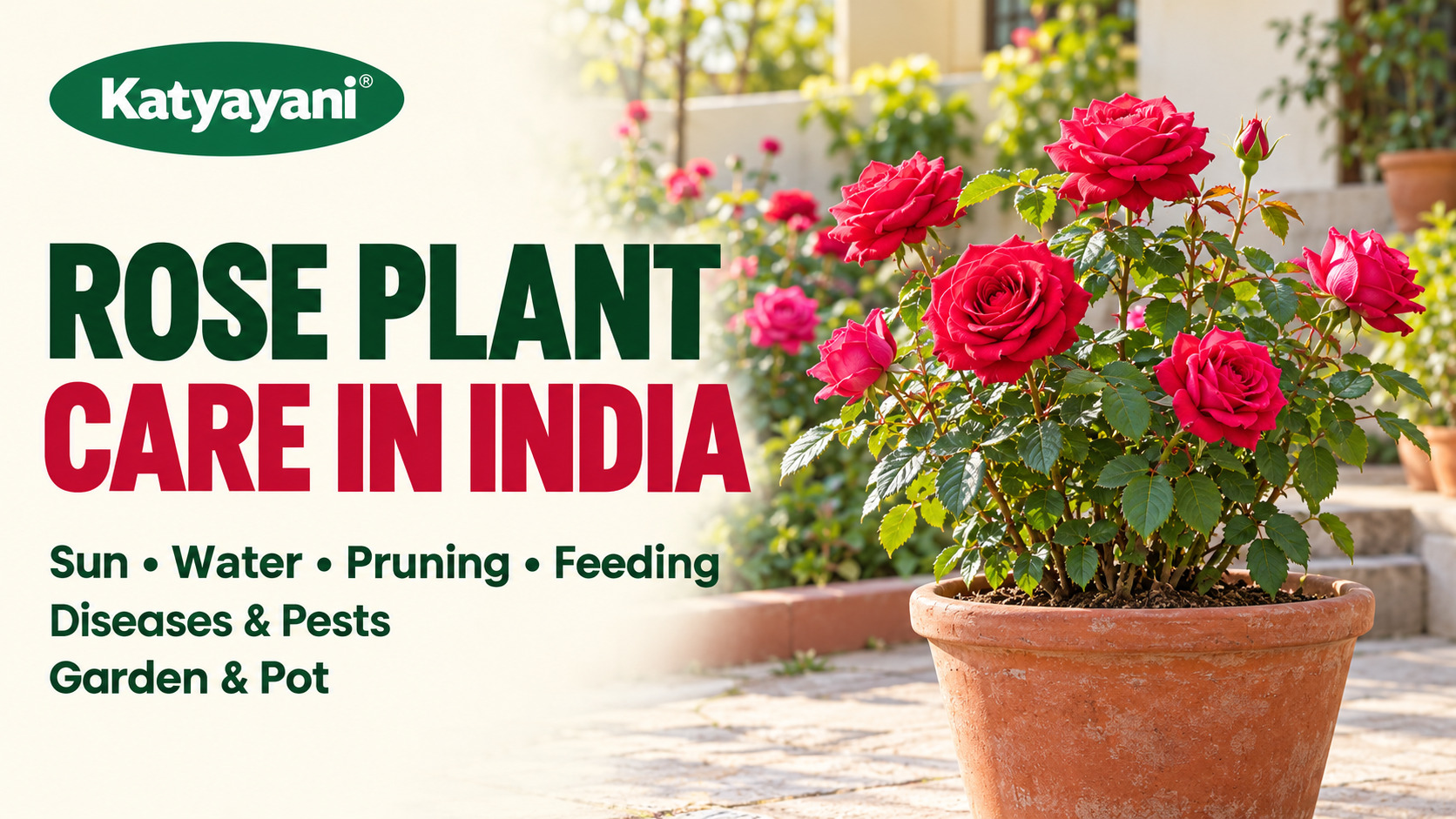
Give a rose at least 6 hours of bright sun, a well-drained soil near pH 6 to 7, and a deep soak when the top few centimetres dry out, not a daily sprinkle. Prune in the cool season before new growth starts; exact timing varies by region, so follow your state agricultural university or rose society advice. Cut thick old stems to about half their length with a slanting cut just above an outward-facing bud. Feed with compost or well-rotted manure after pruning and after each flush. Keep leaves dry, remove diseased leaves, check leaf undersides for mites and aphids every week, and use only the dose printed on the label of a registered product.
How much sun does a rose plant need, and where should you put it?
A rose needs at least 6 hours of bright, direct sunshine a day. TNAU states this as essential. Morning sun matters most because it dries the dew on leaves early, which lowers the chance of black spot and mildew. A spot that gets sun only in the afternoon or sits under a tree will give you leaves, not flowers.
Look at the place before you buy the plant. Stand there at 8 in the morning and at 2 in the afternoon. If the spot is shaded at 8 and again at 2, move on. Keep the plant a little away from walls and other plants too, because the UC IPM guide says plants in sunny sites with good air circulation get less powdery mildew, and the Clemson fact sheet says to space plants for air circulation to cut black spot.
There is one catch in a hot Indian summer. UC IPM notes that sunburn shows as blackened patches on the south and west side of canes, usually after drought stress or mite damage. So full sun does not mean no water and no protection in May. Mulch the root zone, water deeply, and see the seasonal section below.
What soil does a rose plant need, and how do you prepare a planting pit?
Roses grow best in a well-drained sandy loam with pH 6 to 7 and plenty of organic matter. TNAU recommends pits of 45 x 45 x 45 cm filled with a mix of soil and farmyard manure (FYM). Heavy clay that holds water is the usual reason roses struggle, so loosen it and add compost before planting.
| Step | What to do | Source |
|---|---|---|
| Pit size | 45 x 45 x 45 cm | TNAU |
| Fill | Garden soil mixed with well-rotted FYM or compost | TNAU |
| Soil pH | 6 to 7 | TNAU |
| Drainage | Avoid sites where water stands; waterlogging favours root and stem problems | UC IPM |
The bud union is the swollen knob near the base where the flowering variety was grafted on the rootstock. Keep it just above the soil, and remove any shoot that grows from below it. That shoot is the rootstock, not your rose. Most garden roses in Indian nurseries are grafted this way, so check the base of your own plant.
Soil pH also decides whether feeding works at all. If leaves look pale even after you feed, our post on soil pH and nutrient lock explains why the nutrients can be in the soil and still unreachable. Iron and zinc shortage shows up on new leaves when soil is too wet or too alkaline (UC IPM).
How often should you water a rose plant?
Water deeply and less often, and let the top soil dry between waterings. Iowa State Extension suggests a thorough soak every 7 to 10 days in dry weather, and TNAU says to water every 2 days until the plant establishes and then once a week. Light sandy soil needs water more often than clay, and pots dry faster than beds.
| Situation | Watering | Source |
|---|---|---|
| Newly planted | Every 2 days until established | TNAU |
| Established, dry weather | A thorough soak every 7 to 10 days | Iowa State Extension |
| Method | Water the soil, not the leaves; if you must sprinkle overhead, do it in the morning | Iowa State Extension; UC IPM |
| Water quality | Avoid saline water; salt causes leaf tip burn and fewer flowers | TNAU |
Treat those numbers as a starting point. Push a finger 5 cm into the soil. If it is damp, wait. If it is dry and crumbly, water until it runs out of the bottom of the pot or the soil is wet 30 cm down. The UC IPM guide notes that many rose diseases develop when roses get too much water. TNAU describes drip irrigation as a good method for roses.
Mulch helps in two ways. Iowa State recommends 2 to 4 inches (5 to 10 cm) of mulch such as wood chips, shredded bark or pine needles. In India, dry leaves, coconut husk or well-rotted compost do the same job. Keep the mulch a hand's width away from the stem so the base does not stay wet.
When is the best time to plant a rose in India?
Plant when the weather is mild and the soil is workable, so young roots get steady moisture without peak heat or a heavy downpour. The best month depends on your region and altitude, so check with your state agricultural university, a local rose society or a reliable nursery before you buy and plant.
Whatever the month, avoid planting in peak summer heat or in the middle of a heavy monsoon downpour. If you buy a plant in a nursery bag during summer, keep it in light shade, water it, and plant it when the weather turns milder.
When should you prune roses in India?
Main pruning is done in the cool season, when the plant has slowed down and before new growth starts. The TNAU floriculture FAQ covers pruning of hybrid roses. Exact timing varies by region, so follow your state agricultural university or rose society advice rather than a single date from a blog.
Why does the answer differ from place to place? Because the right moment is when the plant is dormant or nearly dormant and new buds are about to swell, and that happens at different times in different climates. A pruning trial at UHS Bagalkot on one hybrid tea variety found that the month of pruning changed the number of flowers, which shows that timing matters. Use your own region's timing rather than a month from another climate.
A simple rule: prune when the plant has stopped pushing soft new growth and the weather is neither freezing nor in a monsoon downpour. Flowering starts about 45 days after pruning (TNAU). If you want blooms for a winter occasion, count back about six weeks and prune then.
How do you prune a rose step by step?
Remove the dead, diseased, weak and crossing stems first. Then cut the thick stems from last season to about half their length. Make a slanting cut a little above an outward-facing bud, then seal the cut with Bordeaux or copper oxychloride paste. Hard pruning suits hybrid teas, while climbers need only dead wood removed.
- Clean your secateurs. The Clemson sheet advises disinfecting tools used on diseased plants with 1 part household bleach to 9 parts water. Wipe them between plants if one was diseased.
- Cut out the dead, diseased, weak and crossing stems. TNAU also lists unproductive shoots. Cut back to healthy, green wood.
- Shorten the healthy thick stems from last season by about half. This is the TNAU guidance for hybrid roses.
- Make each cut at an angle, just above an outward-facing bud. The Bagalkot trial used a cut at about 45 degrees, about 5 mm above a strong, healthy outward-facing bud. Slanting the cut lets water run off the bud.
- Remove suckers. Take off shoots growing from below the bud union. Pull or cut them at the root.
- Seal the cuts. TNAU says to apply Bordeaux paste or copper oxychloride paste on the cut ends.
- Clean up. Collect and bin the trimmings and fallen leaves. Do not compost diseased material.
Die-back is the reason to cut carefully. TNAU describes die-back (Diplodia) as twigs drying from the tip downwards and turning black, which can spread to the roots and kill the plant. The fix is to prune so that lesions on young shoots are removed. If you see black or brown stem tissue, cut back until the inside of the stem looks green and healthy.
What is the best fertiliser schedule for roses, organic and NPK?
Roses are heavy feeders. Feed straight after pruning, again after the first flush of flowers, and again after the second. Start with well-rotted compost or farmyard manure worked into the top soil, placed away from the stem, then water well. If you also use a bought fertiliser, use the dose on its label and do not exceed it.
| When | What | Note |
|---|---|---|
| After pruning | Well-rotted compost or FYM in the top soil, a little away from the stem | TNAU lists FYM and a basal NPK feed after pruning; use the label dose of any bought fertiliser |
| After the first flush | Compost again, plus a balanced fertiliser at the label dose | Water in well |
| After the second flush | Same, before the next bloom | Stop if the plant is stressed by heat or drought |
A soil test is the most reliable guide to what your soil needs. Without one, go gently and watch the plant. New leaves that are dark green and soft with few buds point to too much nitrogen. Pale leaves that stop growing point to too little.
Organic-first is easy with roses. Mix well-rotted compost or vermicompost into the top soil after pruning and after each flush. For a plant that is not growing, check watering and pH before adding more fertiliser, as the soil pH post above explains.
Do not push feeding in cold or very hot spells. The plant takes up nutrients best when it is actively growing and the soil is moist but not soggy.
How can you get more flowers on a rose plant?
More flowers come from six or more hours of sun, a pruning date that suits your climate, feeding right after pruning and after each flush, and healthy leaves. Remove spent flowers promptly and keep thrips and mites under control. Heat at bud formation can give odd flowers, and water stress does the same.
- Sun first. Under 6 hours of direct sun is the commonest reason a healthy-looking rose gives few buds. TNAU calls 6 hours essential.
- Prune on time. Flowering starts about 45 days after pruning. A rose not pruned in years goes leggy and flowers at the tips only.
- Feed in rhythm. Compost after pruning and after each flush keeps the plant producing new shoots.
- Remove spent flowers. UC IPM lists frequent clipping and prompt removal of spent blooms as a way to reduce thrips.
- Water steadily. UC IPM notes that heat during bud formation or water stress can cause abnormal flowers, and normal flowers return when the weather cools.
What are the main rose diseases, and how do you tell them apart?
Four diseases cause most trouble. Black spot shows black spots with a ragged edge and a yellow halo. Powdery mildew is a white to grey powder on young growth. Rust is orange pustules under the leaf. Die-back is twigs drying and blackening from the tip down. Look at the leaf underside, the new growth and the stem to tell them apart.
| Disease | What you see | What favours it | Source |
|---|---|---|---|
| Black spot (Diplocarpon rosae) | Black spots with feathery or fibrous margins on upper leaf surfaces and stems; yellow halo; infected leaves drop. No fungal growth on the underside | Free water; leaves wet for more than 7 hours; humid coastal areas; miniature roses are more susceptible | UC IPM; Clemson |
| Powdery mildew | White to grey powder on both leaf surfaces, shoots, sepals and buds; leaves may distort and drop; buds may not open | Does not need free water; mild temperatures with humid nights and drier days; shade and poor air flow | UC IPM; Clemson |
| Rust (Phragmidium mucronatum) | TNAU: lemon-yellow pustules on the lower leaf surface and stems, later blackish red; leaves yellow, deform and fall early. UC IPM: small orange pustules on leaf undersides, upper surface often discoloured | Cool, moist weather (UC IPM) | TNAU; UC IPM |
| Die-back (Diplodia rosarum) | Twigs dry from the tip downwards and turn black; can spread to the roots and kill the plant | Wounds, weak plants and plants already stressed by black spot, poor nutrition or winter injury (Clemson) | TNAU; Clemson |
| Botrytis blight | Spotted petals, buds that fail to open, woolly grey spores on rotting tissue, twig die-back | High humidity and cool temperatures | UC IPM; TNAU |
A quick field test: turn the leaf over. Orange or yellow dust underneath means rust (see the TNAU rust page). White powder on top and underneath on new growth means mildew. Black spots with ragged edges on top and a clean underside mean black spot. A photo comparison from a nursery or your KVK is still the best way to be sure.
One more point from Clemson: stem canker and die-back often appear on roses already weakened by black spot, poor nutrition or winter injury. So die-back is often the second step in a bad story, not the first. Keep the leaves healthy and the stems unwounded and you prevent most of it.
How do you control black spot, powdery mildew, rust and die-back, organic first?
Start with sanitation, air flow and dry leaves. Pick off and bin infected leaves, rake up fallen ones, water at the base in the morning and thin crowded stems. If that is not enough, sulphur and neem oil are the home-garden options named by UC IPM and Clemson; they work best as protection, applied before infection, and must not be used within two weeks of each other.
| Disease | Cultural steps first | Options named by university sources | Notes |
|---|---|---|---|
| Black spot | Water in the morning so leaves dry by evening; remove fallen leaves; prune infected stems during dormancy; good air circulation | Neem oil, potassium bicarbonate and sulphur reduce it (UC IPM) | Hybrid teas need protection in place before the wet season (Clemson). Resistant varieties are the long-term fix |
| Powdery mildew | Sunny, airy site; remove diseased leaves and canes; choose resistant varieties | Sulphur, neem oil, or baking soda mixed with horticultural oil (Clemson); neem and sulphur are mainly preventive (UC IPM) | Treatments must go on before infection, so timing matters |
| Rust | Collect and burn fallen leaves (TNAU); avoid overhead watering; prune back badly infected canes | TNAU names wettable sulphur; UC IPM says frequent spraying may not be justified in most gardens | Use the label dose of a registered product |
| Die-back | Prune so lesions on young shoots are removed; paste on cut ends; avoid wounds | Clemson: no fungicide is labelled for stem canker | Keep black spot and mildew under control to protect the stems |
Oil And Sulphur Rule: UC IPM says oils, including neem oil, should not be applied to water-stressed plants or within two weeks of a sulphur spray. In practice: water the plant the day before, spray in the cool of the evening, test on a few leaves first, and pick either sulphur or neem for a given fortnight, not both.
For powdery mildew there is a biological option. The Katyayani Mildew Mantra (Ampelomyces quisqualis) bio-fungicide page says it controls powdery mildew by acting on the fungal spores. Use it as a preventive tool at the dose on the pack, not as a cure for a plant already white with powder.
For garden-scale neem dilution and when not to use it, read our guide to neem oil in the home garden: correct dilution and when not to use it. For soil-side protection and the idea of living bio-agents, Trichoderma and Beauveria for gardeners explains how they work and what they cannot do.
Which fungicides have a rose row in the CIB&RC list?
The CIB&RC fungicide list up to 30 September 2026 carries rose rows for captan 75 WP (black spot) and for sulphur, carbendazim, dinocap, bupirimate and lime sulphur against powdery mildew. Two mixtures also list rose. Always use the dose printed on the label of the registered product you hold, and do not exceed it.
| Active (as listed) | Rose disease on the row |
|---|---|
| Captan 75 WP | Black spot |
| Carbendazim 50 WP | Powdery mildew |
| Sulphur 40 SC | Powdery mildew |
| Dinocap 48 EC | Powdery mildew |
| Bupirimate 26.7 EC | Powdery mildew |
| Lime sulphur 22 SC | Powdery mildew (delayed dormant spray) |
| Chlorothalonil + difenoconazole; fluopyram + tebuconazole | Leaf spots and powdery mildew; powdery mildew, black spot and anthracnose leaf spot |
Label Check: A label that does not list roses is not a rose label. Read the crop and pest on the pack, use the dose printed there, wear protection, and keep children and pets away. For rust, die-back or any disease you cannot identify, take a leaf and a photo to your KVK or state horticulture office.
What are the main pests of roses, and how do you spot them?
Aphids, thrips, spider mites and scale are the four to look for. Aphids cluster on new shoots and buds and leave sticky honeydew. Thrips scar petals with brown streaks. Spider mites stipple leaves, mostly on the underside, and make fine webs. Scale looks like grey or brown crusts on canes. Check every week, especially in warm dry weather.
| Pest | Signs | What UC IPM and TNAU say |
|---|---|---|
| Aphids | Distorted or killed buds, smaller flowers, sooty mould on leaves from honeydew | Low numbers do little harm. A forceful water spray early in the day is often enough. Ants protect aphids, so block them. Insecticidal soap or oil, including neem oil, suppresses aphids |
| Thrips | Brown streaks or distorted petals; tiny yellow or black insects inside blossoms; chilli thrips can distort leaves | Clip and remove spent blooms often. Thrips can usually be tolerated in home gardens. Sprays work poorly because thrips feed deep inside buds |
| Spider mites | Stippled or bleached leaves, first on the underside; webbing; worse in dry, dusty conditions | Keep plants watered, reduce dust, wash leaves, protect natural enemies. Soap or oil works if it covers leaf undersides. Carbaryl and pyrethroids are often followed by more mites |
| Scale | Grey, round or oval crusts on canes; heavy numbers cause cane die-back; soft scales leave honeydew | In the cool season cut back and destroy infested canes; use oil on remaining canes if numbers are high. TNAU: rub off red scale with cotton, and cut and burn affected branches |
| Others on the TNAU page | Rose chaffer beetles, white grub, mealy bug, flower caterpillars, bud worm | Hand-pick chaffer beetles by day; light traps for white grub beetles |
The pest signs above follow the UC IPM insects and mites guide. Three habits catch most problems early. Turn leaves over once a week. Look inside half-open buds. Look at the ant trail on a stem, because ants usually point to aphids or soft scale. Our organic pest control for home gardens post covers the general toolkit.
How do you control aphids, thrips, mites and scale on roses without chemicals first?
Start with a jet of water, hand removal and pruning out infested canes. Then use insecticidal soap or neem oil on leaf undersides in the evening. Protect ladybirds and other predators by avoiding broad-spectrum sprays. UC IPM warns that broad-spectrum insecticides often flare pests and that carbaryl and pyrethroids are often followed by more mites.
- Aphids: wash them off with a forceful water spray early in the day, and keep ants off the stem with a sticky band. Repeat every few days.
- Spider mites: wash leaves, water the plant, reduce dust, and spray soap or oil on the leaf undersides. Repeat as the label says.
- Thrips: remove spent flowers and fallen petals, and clip off distorted buds. Do not expect a spray to reach thrips deep in a bud.
- Scale: cut out heavily infested canes in the cool season and burn or bin them; use horticultural oil on what remains if numbers are high.
- Always: spray in the evening, cover leaf undersides, test on a few leaves, and avoid oil on a water-stressed plant.
For sucking pests, the Katyayani Activated Neem Oil (3000 PPM) page lists aphids, thrips and spider mites among the pests it is for. Use the dose and method printed on the pack, and read our neem dilution guide above before spraying a small garden plant.
Label Check: The CIB&RC insecticide list up to 30 September 2026 carries rose rows for these mite killers: abamectin 1.9 EC, acequinocyl, bifenazate, cyenopyrafen, flufenoxuron, hexythiazox and milbemectin. Dimethoate 30 EC has rose rows for scale and thrips. These are chemical products; if you use one, follow the label exactly, wear protection and keep children and pets away.
If a pest is out of control, take a leaf and a photo to your KVK or state horticulture office instead of reaching for an old, highly toxic insecticide. Do not use such products on a balcony or terrace rose.
How should you care for roses in summer, monsoon and winter?
In summer, mulch, water deeply and watch for mites and sunburn. In the monsoon, keep leaves dry, thin the plant and watch for black spot, rust and root rot. In winter, prune on schedule for your region, feed lightly after pruning and expect the main bloom about six weeks later. In cold hills, protect against frost damage.
| Season | What to do | Watch for |
|---|---|---|
| Summer | Deep watering, 5 to 10 cm of mulch, afternoon shade for pots, wash dusty leaves | Spider mites (dry, dusty conditions), sunburn on south and west canes (UC IPM), abnormal flowers in the heat |
| Monsoon | Water only when the top soil is dry, thin crowded stems, collect fallen leaves | Black spot (leaves wet for more than 7 hours), rust in cool, moist weather, root rot in pots |
| Autumn | Prune as per your region's advice, seal cuts, feed after pruning | Die-back from wounds, aphids on new growth |
| Winter | Water less, apply compost, keep sun on the plant | Mildew on new growth in humid nights, Botrytis on buds in cool, damp spells, frost in cold hills |
| Spring | Feed after the flush, deadhead | Aphids, thrips on open flowers |
UC IPM adds that cold-weather winter injury leads to cankers, and that heavy mulch helps in cold places. In the plains, frost is rarely a rose problem but cold, damp nights do bring mildew and Botrytis.
How do you grow and care for roses in pots?
Use a large, deep pot with drainage holes and a loose, well-drained potting mix with compost. The University of Maryland Extension says drainage is critical, and that gravel or pot shards at the bottom do not improve drainage. Water more often than garden roses, feed lightly, and put the pot in 6 or more hours of sun.
- Drainage holes. Containers need holes or slits at the bottom. Empty saucers after watering and raise pots on small feet or bricks.
- No gravel layer. UMD warns that rocks, gravel or shards at the bottom do not improve drainage and can raise the water table in the pot.
- Pot size. A rose is a shrub with a bigger root system than a flower or herb, so choose the largest, deepest pot you can manage.
- Pot material. UMD notes clay and other porous pots dry out faster than plastic, and dark pots get hotter, which can hurt young roots. In an Indian summer, shade the pot wall from afternoon sun.
- Potting mix. Use a loose, well-drained mix with compost. Our terrace garden soil mix recipe is a good base. The mix should drain freely and hold some moisture.
- Feeding. UMD notes drainage also flushes out surplus fertiliser and salts. Feed lightly and more often rather than a big dose at once, and keep to the label dose of any bought product.
- Repotting. Check for roots circling at the bottom each year, and refresh the top layer of mix after pruning.
Overwatering is the commonest killer of potted roses. If leaves yellow and the pot stays heavy and wet, read our guide to root rot in containers before you reach for fertiliser.
Why are my rose leaves turning yellow?
Yellow leaves have several causes: too much or too little water, a nutrient shortage, black spot or rust, or mites. Look at the pattern. Yellow between green veins on new leaves points to iron or zinc shortage. Yellowing with black spots and a halo is black spot. Yellow upper surface with orange pustules underneath is rust.
| Pattern | Likely cause | What to check or do |
|---|---|---|
| Yellow between veins on new leaves | Iron or zinc shortage, often when the soil is too wet or too alkaline, or low in micronutrients (UC IPM) | Check drainage and pH; chelated forms can be applied to soil or leaves |
| Pale older leaves, slow growth | Nitrogen shortage; soils low in organic matter need nitrogen added (UC IPM) | Add compost or a balanced feed at the label dose |
| Yellow with black spots and a yellow halo | Black spot (Clemson) | Remove leaves, water in the morning |
| Yellow patches on top, orange pustules below | Rust (TNAU, UC IPM) | Collect and destroy fallen leaves |
| Yellow, stippled or bleached with webbing underneath | Spider mites (UC IPM) | Wash leaves, increase watering, soap or oil on undersides |
| Yellow and the soil is soggy | Waterlogging and root rot | Reduce watering, improve drainage, see the root rot post |
Our general chart in yellow leaves: a nutrient deficiency chart is written for indoor plants but the nutrient logic is the same. Treat the cause, not the colour. Spraying a fungicide on a plant that is only overwatered wastes money.
Why is my rose plant not flowering?
The usual reasons are too little sun, no pruning or pruning at the wrong time, no feeding, heat or water stress at bud time, and pest damage to buds. Roses need 6 hours of direct sun (TNAU) and flower about 45 days after pruning. Check light first, then pruning date, then feeding, then thrips.
- Count the sun hours. Under 6 hours of direct sun means few buds.
- Check the last pruning date. Flowering starts about 45 days after pruning, so a plant pruned last month has not had time.
- Look at the leaves. Pale, small leaves point to hunger; heavy dark leaves with no buds can mean too much nitrogen.
- Look at the buds. Brown streaks on petals, or buds that fail to open, can be thrips (UC IPM) or powdery mildew (Clemson).
- Think about the weather. Heat during bud formation or water stress can cause abnormal flowers (UC IPM).
Why are rose leaves curling or distorted?
Distorted, curled leaves on new growth usually mean sap-sucking pests or mildew. UC IPM says chilli thrips can distort leaves, aphids distort buds, and powdery mildew makes leaves distort and drop. Check new shoots and leaf undersides with a magnifying glass before spraying anything.
| What you see | Likely cause | Source |
|---|---|---|
| Curled, distorted young leaves with tiny insects | Chilli thrips | UC IPM |
| Sticky leaves and distorted buds | Aphids | UC IPM |
| Distorted leaves with white powder | Powdery mildew | UC IPM; Clemson |
| Bleached, stippled leaves with fine webbing | Spider mites | UC IPM |
Rose plant care calendar: what to do at each stage
Months differ by region, so this calendar follows the plant's stages instead. Match each stage to your own pruning date from your state agricultural university or rose society. The pattern is the same everywhere: prune, seal, feed, bloom, deadhead, feed again, rest, and watch the leaves in humid weather.
| Stage | Task | Note |
|---|---|---|
| Before pruning | Reduce heavy feeding, clear fallen leaves, clean tools | Check for black spot and rust after wet spells |
| Pruning day | Prune, seal cuts with paste, remove suckers, add compost | Flowering follows in about 45 days (TNAU) |
| New growth | Water steadily, keep sun on the plant, watch for aphids on tender shoots | Keep leaves dry |
| Bloom | Remove spent flowers, check buds for thrips | Mildew and Botrytis in humid nights |
| After each flush | Feed with compost and a label-dose fertiliser | Water in well |
| Hot spell | Deep watering, mulch, shade pots, wash leaves | Spider mites; sunburn on canes |
| Wet spell | Thin crowded stems, collect fallen leaves | Black spot and rust in humid weather |
Conclusion
Rose care comes down to a few habits: six hours of sun, steady watering at the root, pruning in the cool season on the timing your region follows, feeding after each pruning and flush, and a weekly look at the underside of the leaves. Start with sanitation and air flow, then sulphur or neem for disease and soap or neem for sucking pests, and read the label before any chemical, because a label that does not list roses is not a rose label. Use the dose printed on the label of a registered product, never more, and ask your KVK or state horticulture office when you are unsure.
Questions Farmers Ask
How often should I water a rose plant?
When is the best time to prune roses in India?
How do you prune a rose plant step by step?
How much sun does a rose plant need?
What is the best fertiliser for roses?
How do you get more flowers on a rose plant?
Why are my rose leaves turning yellow?
How do you treat black spot on roses?
What causes white powder on rose leaves?
How do you get rid of aphids and mites on roses?
Can roses grow in pots?
Why are my rose leaves curling?

Microbiologist
Microbiologist at Katyayani Organics. MSc in Microbiology, 2.6 years of experience.
View all authors

Leave a Comment