Home Gardening
Tips and guides for growing plants at home, in pots, containers and terrace gardens
18 articles
 19 min
Microgreens: How to Grow at Home (Best Seeds, Days to Harvest, Cocopeat Method, Mould Prevention, Food Safety and Yield per Tray)
Microgreens are young vegetable or herb seedlings cut about 7 to 21 days after germination, with the stem and first leaves. For a first tray, sow radish, mustard or fenugreek on damp cocopeat in a shallow tray with drainage, keep it covered and dark for 1 to 3 days, then give bright light, gentle bottom watering and good airflow. Radish is ready in about 8 to 12 days, sunflower and pea in about 8 to 10. Most microgreens do not regrow. Buy untreated seed, keep trays clean, and do not treat microgreens as risk-free raw food.
 17 min
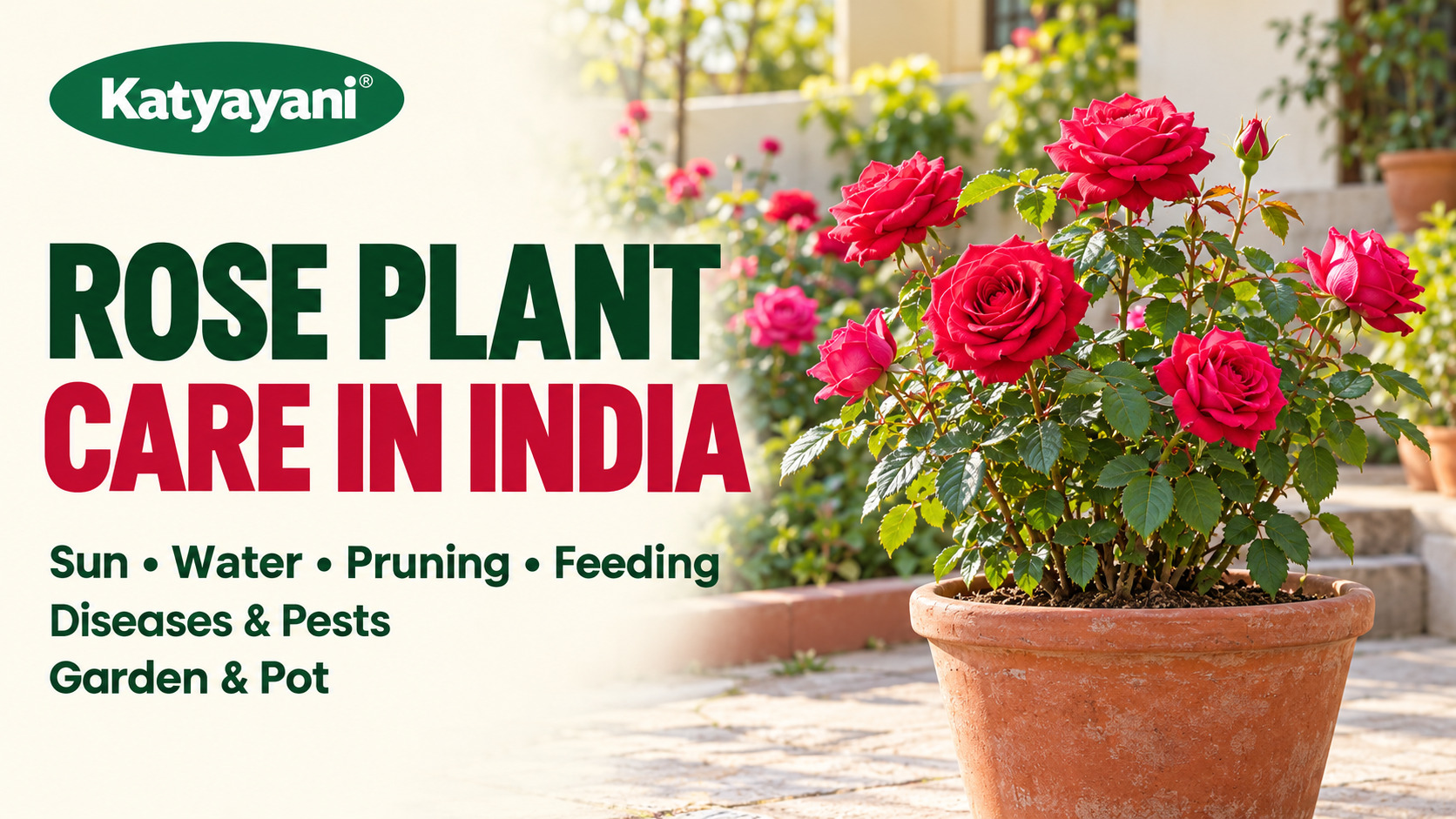
Rose Plant Care in India: Sun, Water, Pruning, Feeding, Diseases and Pests (Garden and Pot)
Give a rose at least 6 hours of bright sun, a well-drained soil near pH 6 to 7, and a deep soak when the top few centimetres dry out, not a daily sprinkle. Prune in the cool season before new growth starts; exact timing varies by region, so follow your state agricultural university or rose society advice. Cut thick old stems to about half their length with a slanting cut just above an outward-facing bud. Feed with compost or well-rotted manure after pruning and after each flush. Keep leaves dry, remove diseased leaves, check leaf undersides for mites and aphids every week, and use only the dose printed on the label of a registered product.
 15 min
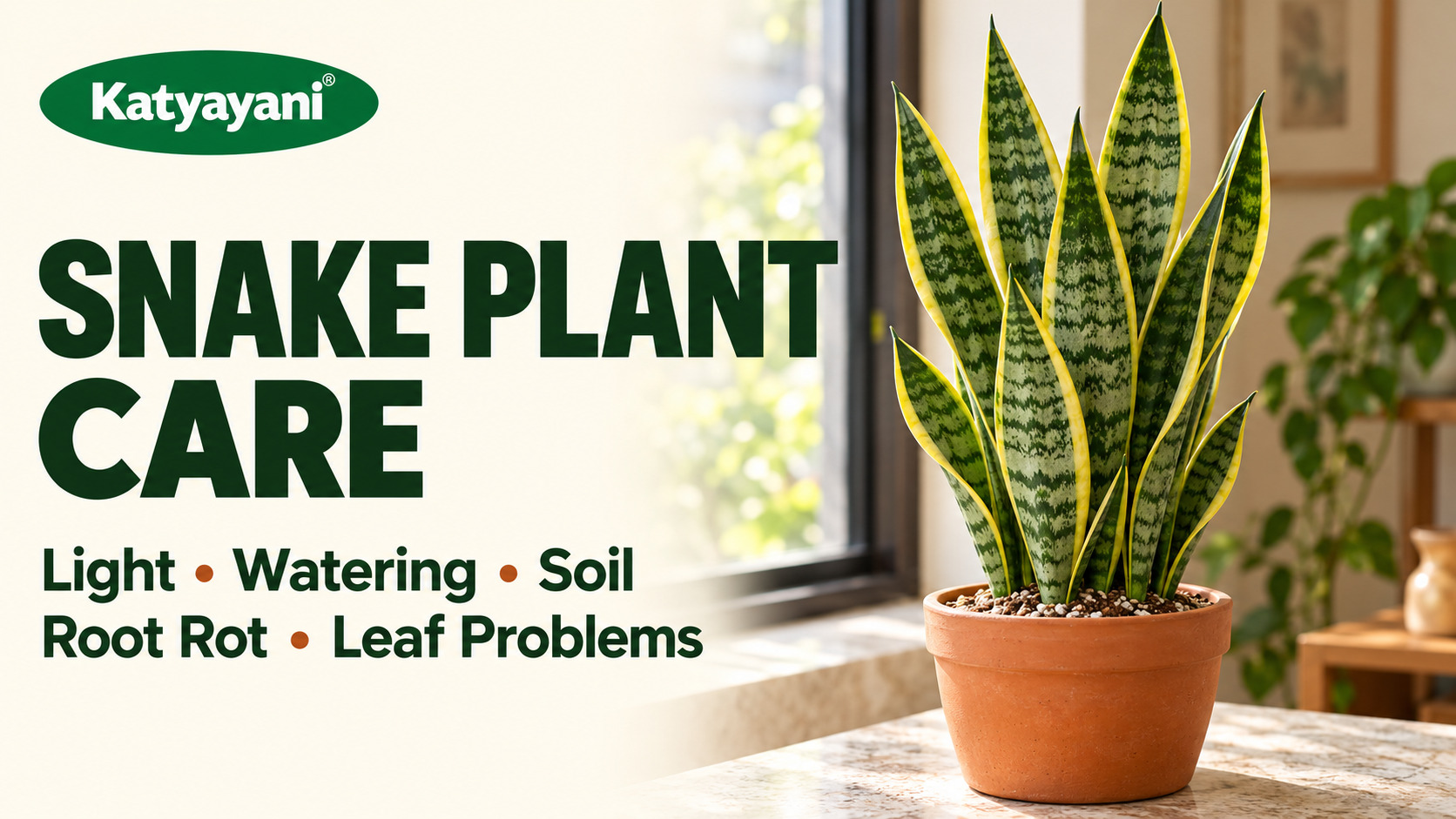
Snake Plant Care: Light, Watering, Soil, Root Rot and Leaf Problems
A snake plant (now Dracaena trifasciata, formerly Sansevieria) wants bright indirect light, a quick-draining mix, a pot with drainage holes, and water only when the soil has dried out. Clemson gives 2 to 4 weeks between waterings in the growing season and 4 to 6 weeks in fall and winter. Overwatering and root rot are the main risks. The plant is toxic to cats and dogs if eaten, and the research says plants alone do not clean room air quickly enough to matter.
 20 min
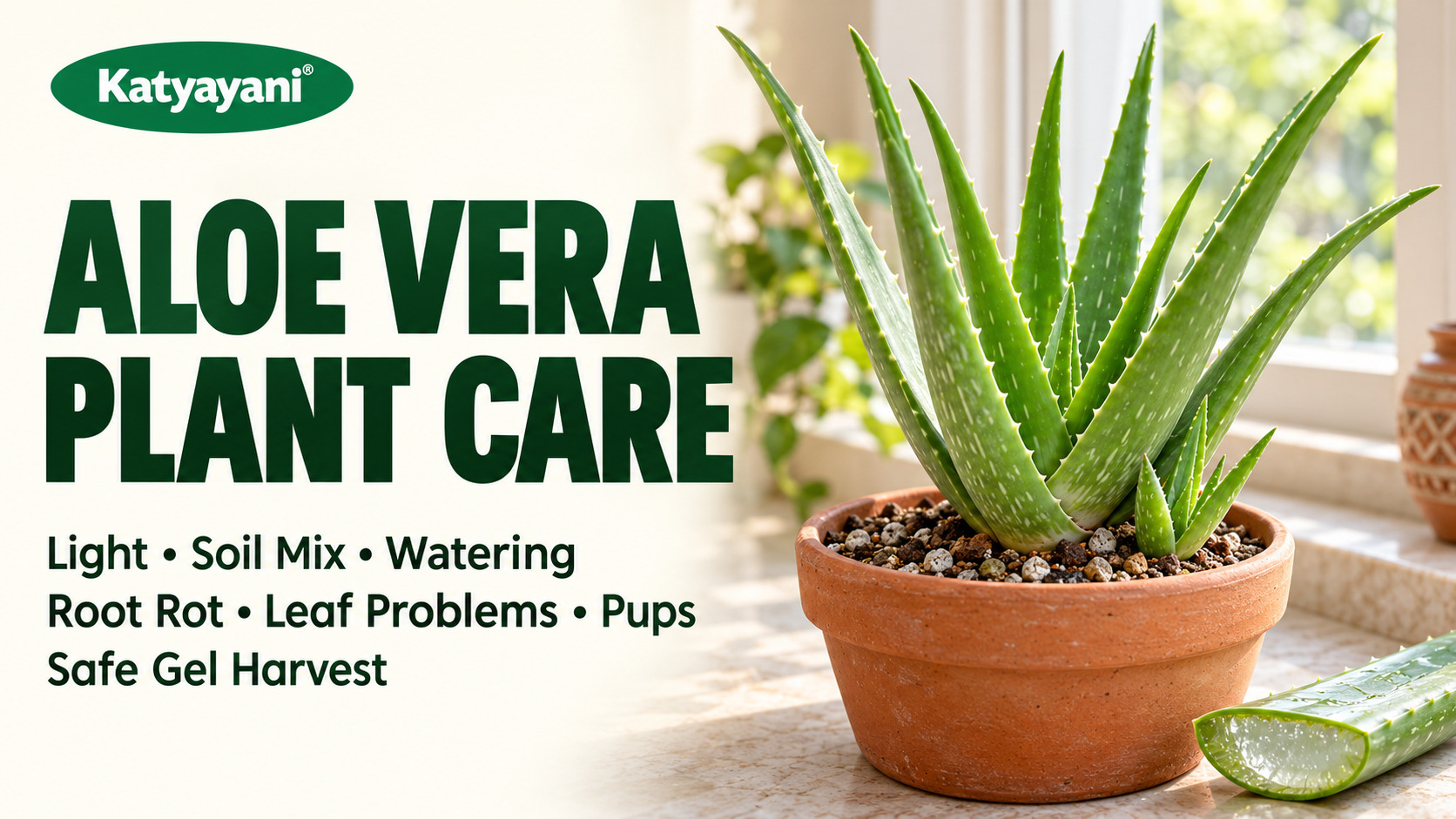
Aloe Vera Plant Care: Light, Soil Mix, Watering, Root Rot, Leaf Problems, Pups and Safe Gel Harvest
Aloe vera needs bright light, a fast-draining mix and a pot with holes. Water deeply, then wait until the soil has dried out completely before watering again, and water less in winter when the plant slows down. Overwatering and root rot are the main cause of death, and advanced rot has no cure. Repot about every two years and remove pups once they are a couple of inches tall. Do not eat the plant without medical advice.
 18 min
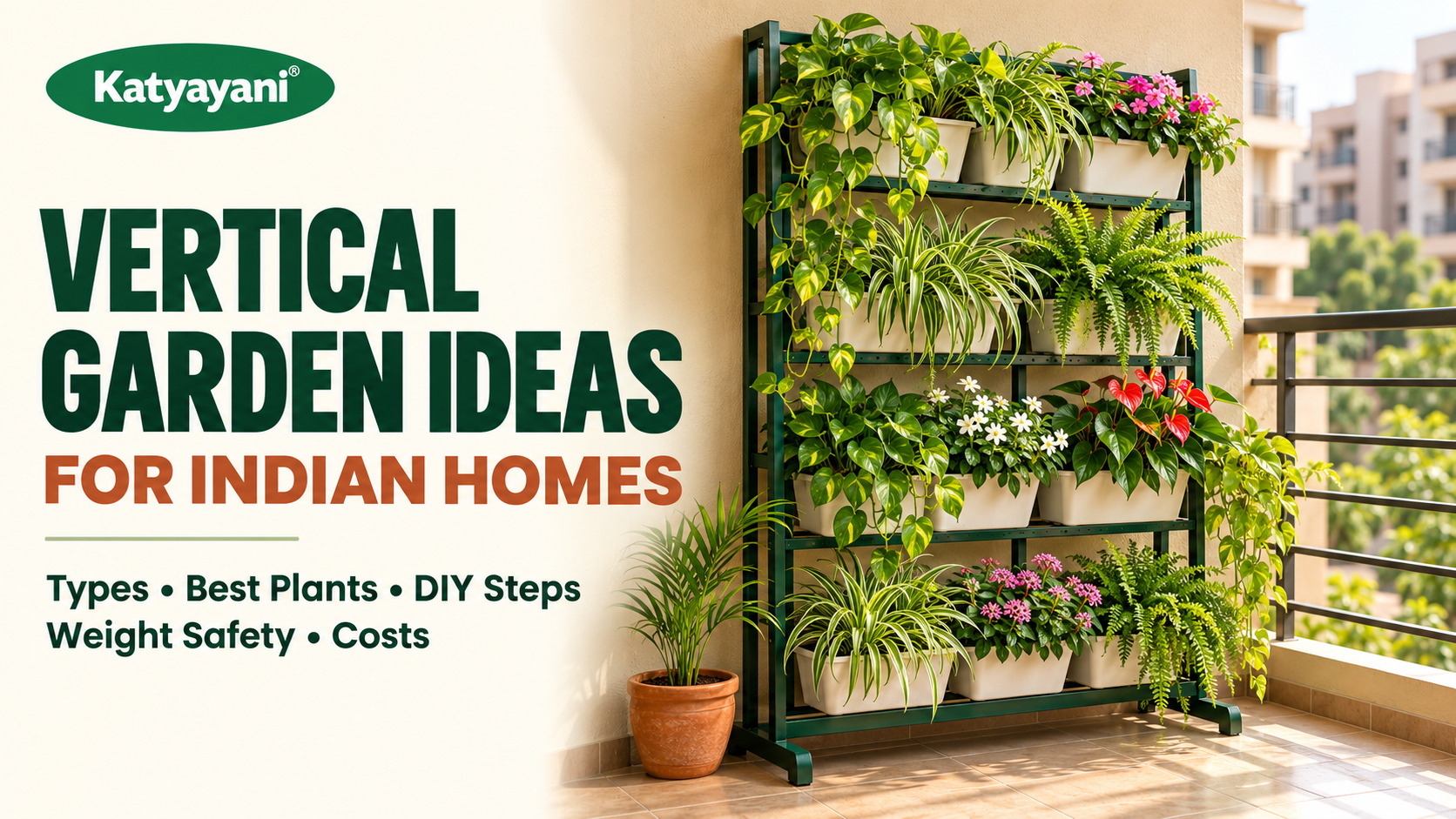
Vertical Garden Ideas for Indian Homes: Types, Best Plants, DIY Steps, Weight Safety and What It Costs
A vertical garden grows plants upward on a wall, rail, frame or trellis so a small space holds many plants. For Indian homes the easy options are pocket planters, pallets, trellises and stacked or railing pots. Match the plants to the light first: leafy greens need about 3 to 6 hours of sun, fruiting vegetables at least 6. Plan for weight, because wet soil is heavy, and protect the wall behind with waterproofing and an air gap. Drip watering saves effort. ICAR-IIHR puts the cost of its Arka vertical structure, which fits in one square metre, at Rs 22,000. Other costs vary by system and vendor, so get two or three written quotes.
 14 min
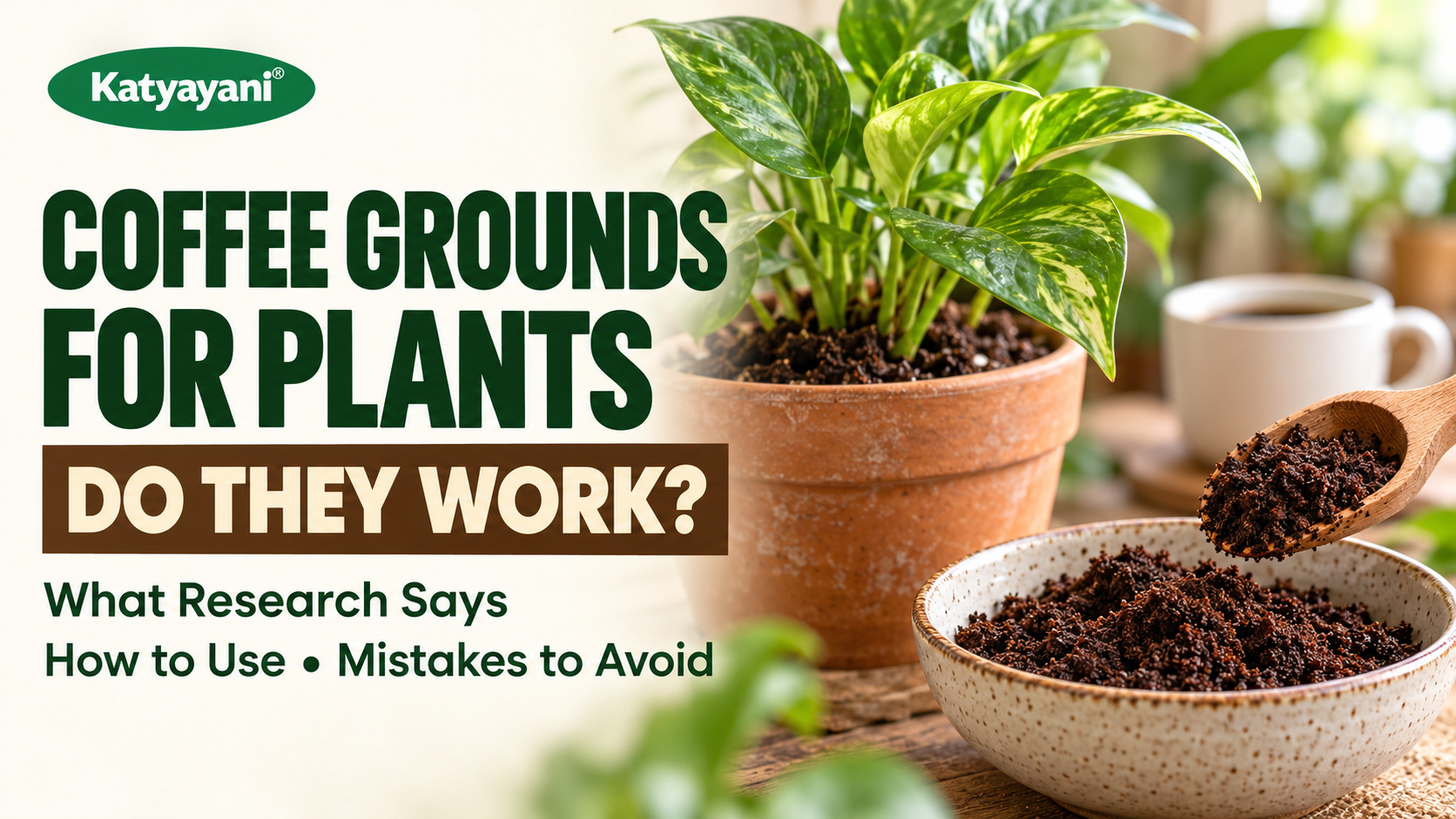
Coffee Grounds for Plants: Do They Work? What Research Says, How to Use Them and Mistakes to Avoid
Used coffee grounds can help, but not as a quick fertiliser. They hold only about 1 to 2 percent nitrogen, and most of it is locked up until microbes break the grounds down. Oregon State and Washington State extension say the best use is in compost, kept to no more than 20 percent of the pile by volume. Used grounds are near neutral (pH 6.5 to 6.8), so they will not acidify soil. If you put them straight on soil, use about half an inch mixed into the top 4 inches, never a thick layer, and never where you are sowing seeds.
 5 min
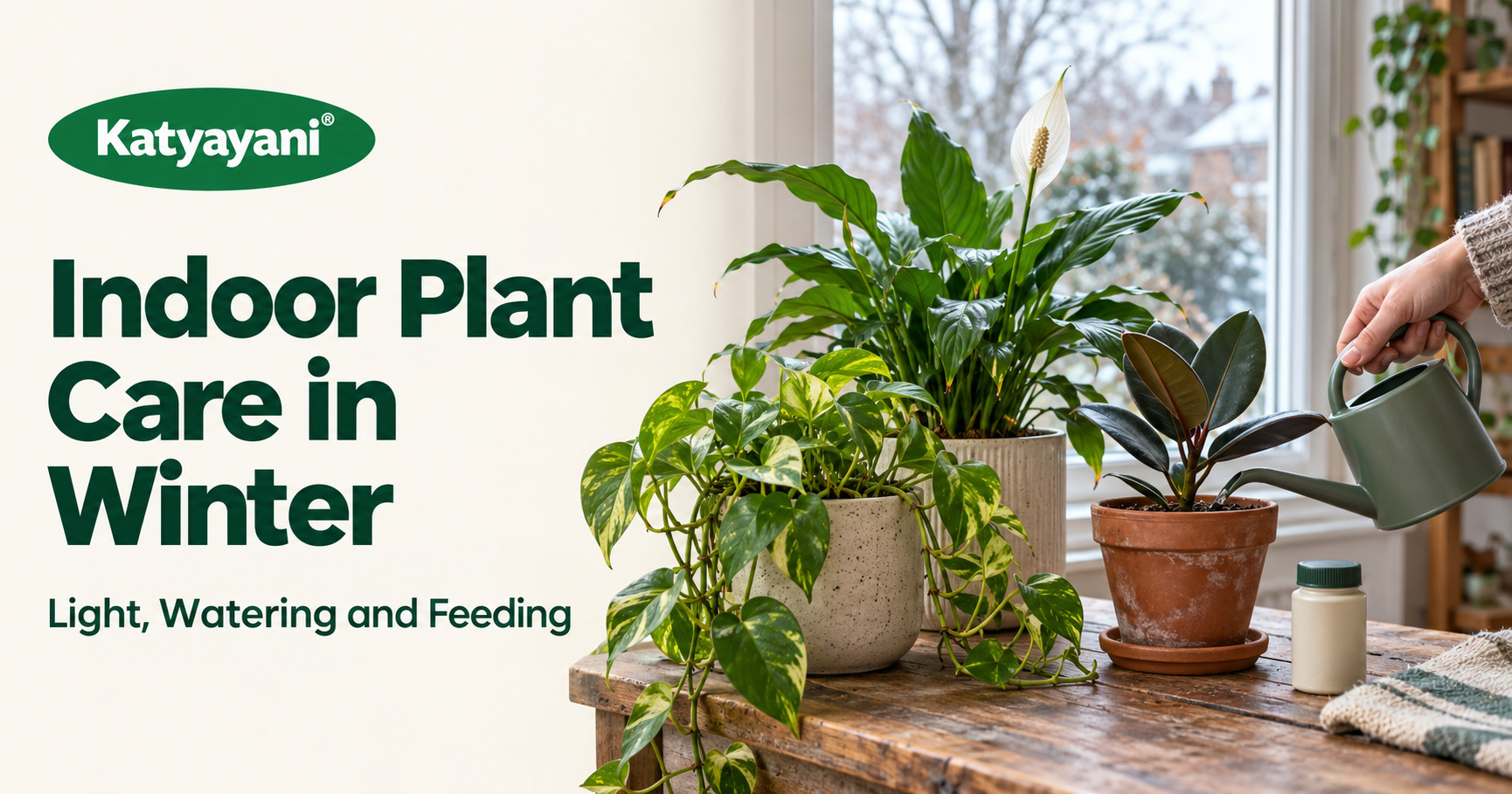
Indoor Plant Care in Winter: Light, Watering and Feeding
In winter, move indoor plants to the brightest window, water only when the top 2 to 5 cm of soil is dry, and stop or halve feeding until spring. Keep them between about 15 and 24°C (60 to 75°F), away from heaters and cold glass, and raise humidity with trays or grouping. Check for spider mites and fungus gnats weekly.
 5 min
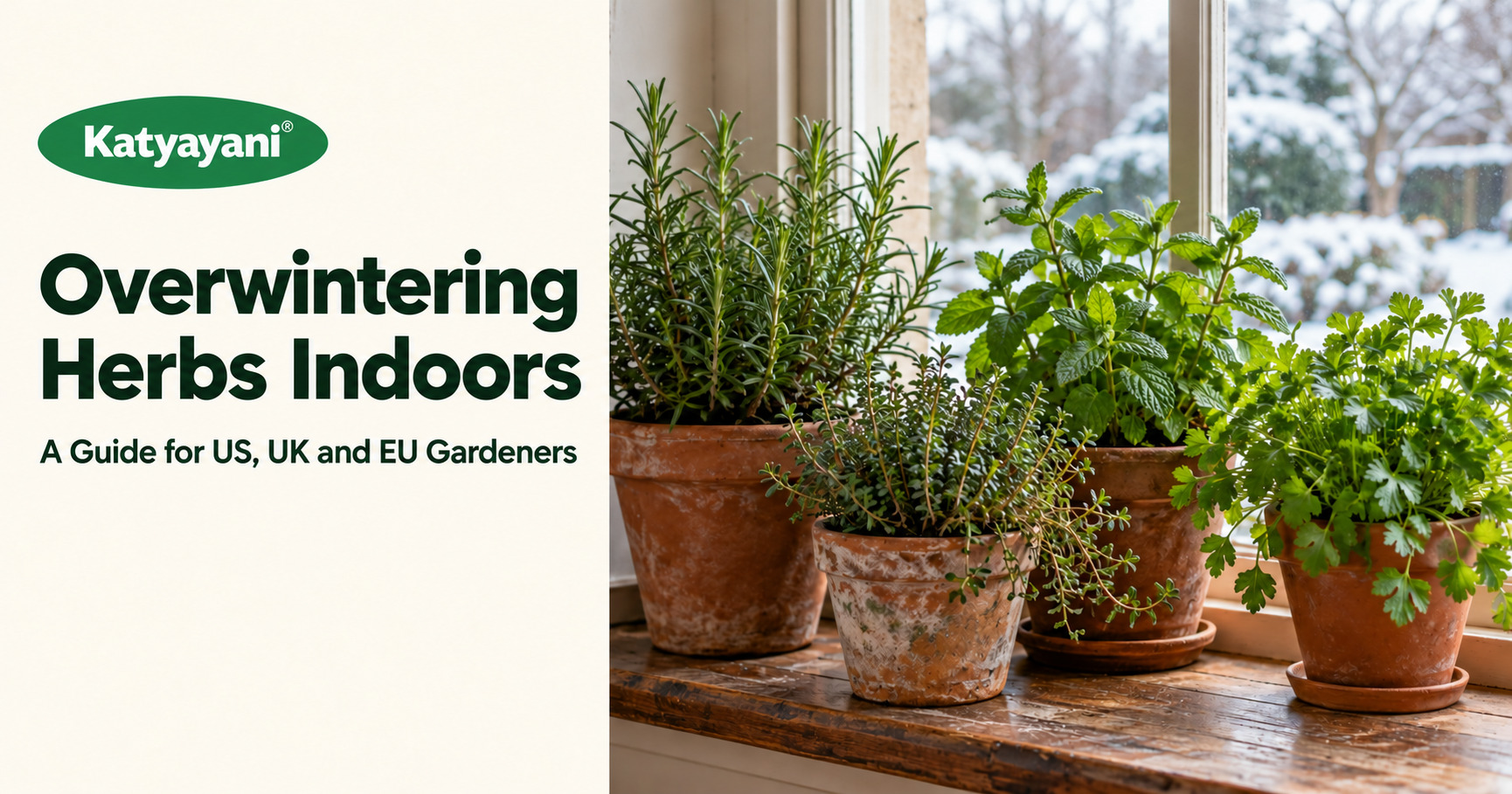
Overwintering Herbs Indoors: A Guide for US, UK and EU Gardeners
Bring tender herbs such as rosemary, bay, lemon verbena and basil indoors before nights fall below about 45 to 50°F (7 to 10°C). Pot them in free-draining mix, give a south-facing window or 12 to 14 hours of grow light, keep them at 50 to 65°F (10 to 18°C), and water only when the top inch is dry.
 5 min
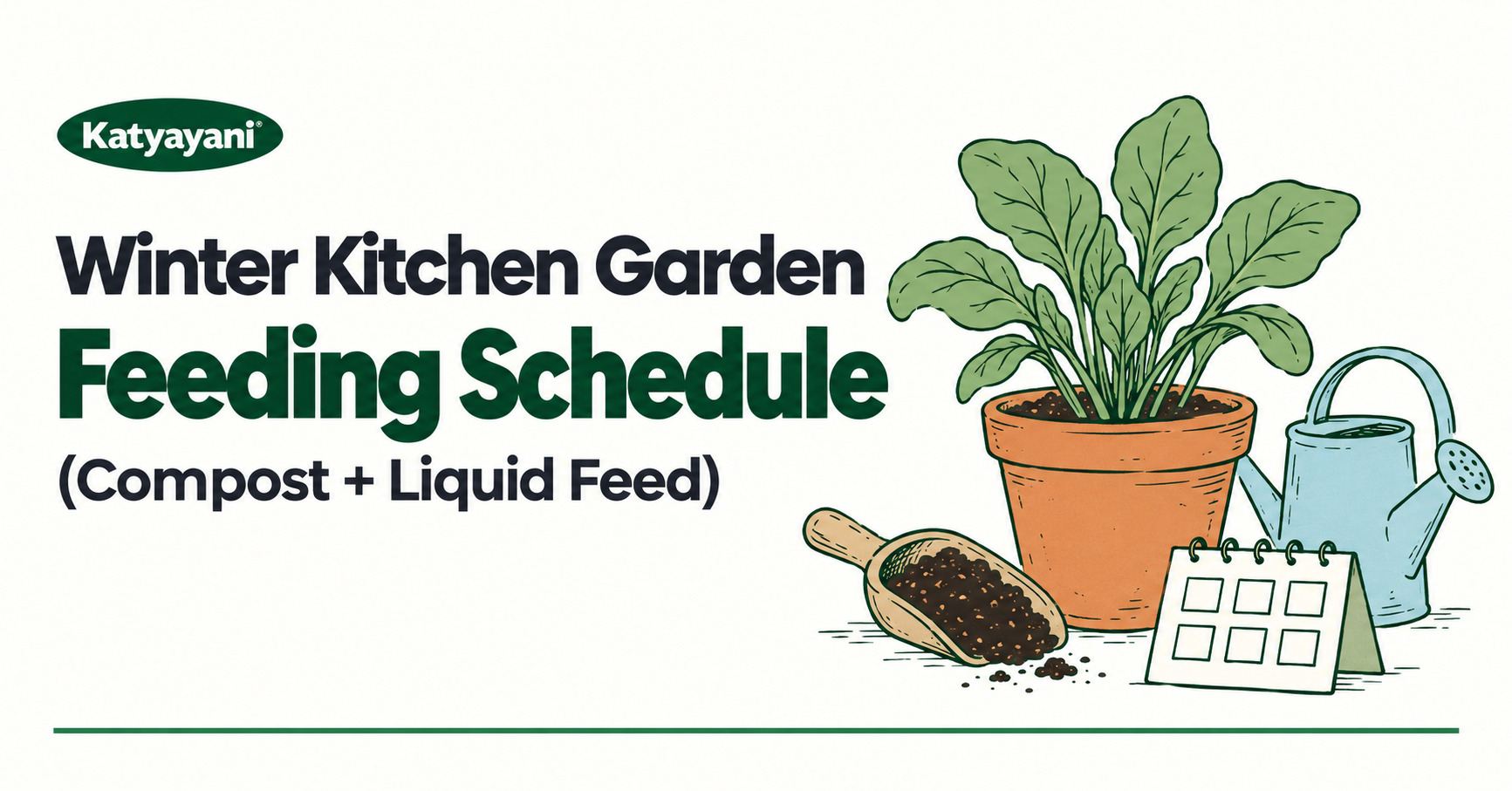
Winter Kitchen Garden Feeding Schedule (Compost + Liquid Feed)
A simple winter kitchen garden fertilizer schedule is: mix 25 to 30 percent compost or vermicompost into the potting mix at sowing, top-dress 100 to 150 g vermicompost per 12 inch pot every 3 to 4 weeks, and give a diluted liquid feed such as seaweed extract every 10 to 15 days. Feed less in December and January.
 5 min
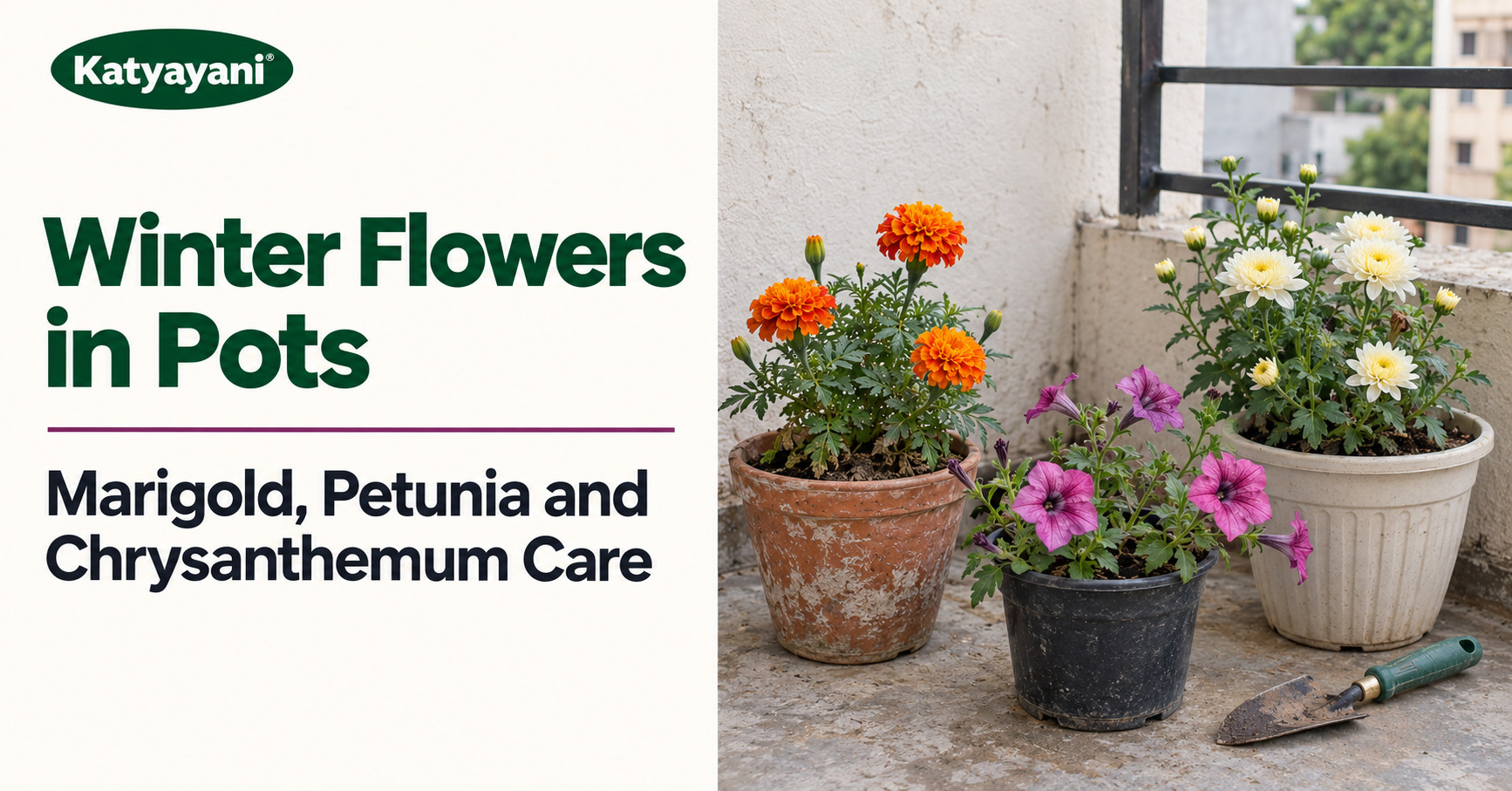
Winter Flowers in Pots: Marigold, Petunia and Chrysanthemum Care
Marigold, petunia and chrysanthemum are the easiest winter flowers for pots in India. Give them 5 to 6 hours of sun, a free-draining mix with compost, 8 to 12 inch pots, and a potassium-rich feed once buds form. Pinch marigold and petunia early for bushy plants and deadhead spent blooms weekly.
 5 min
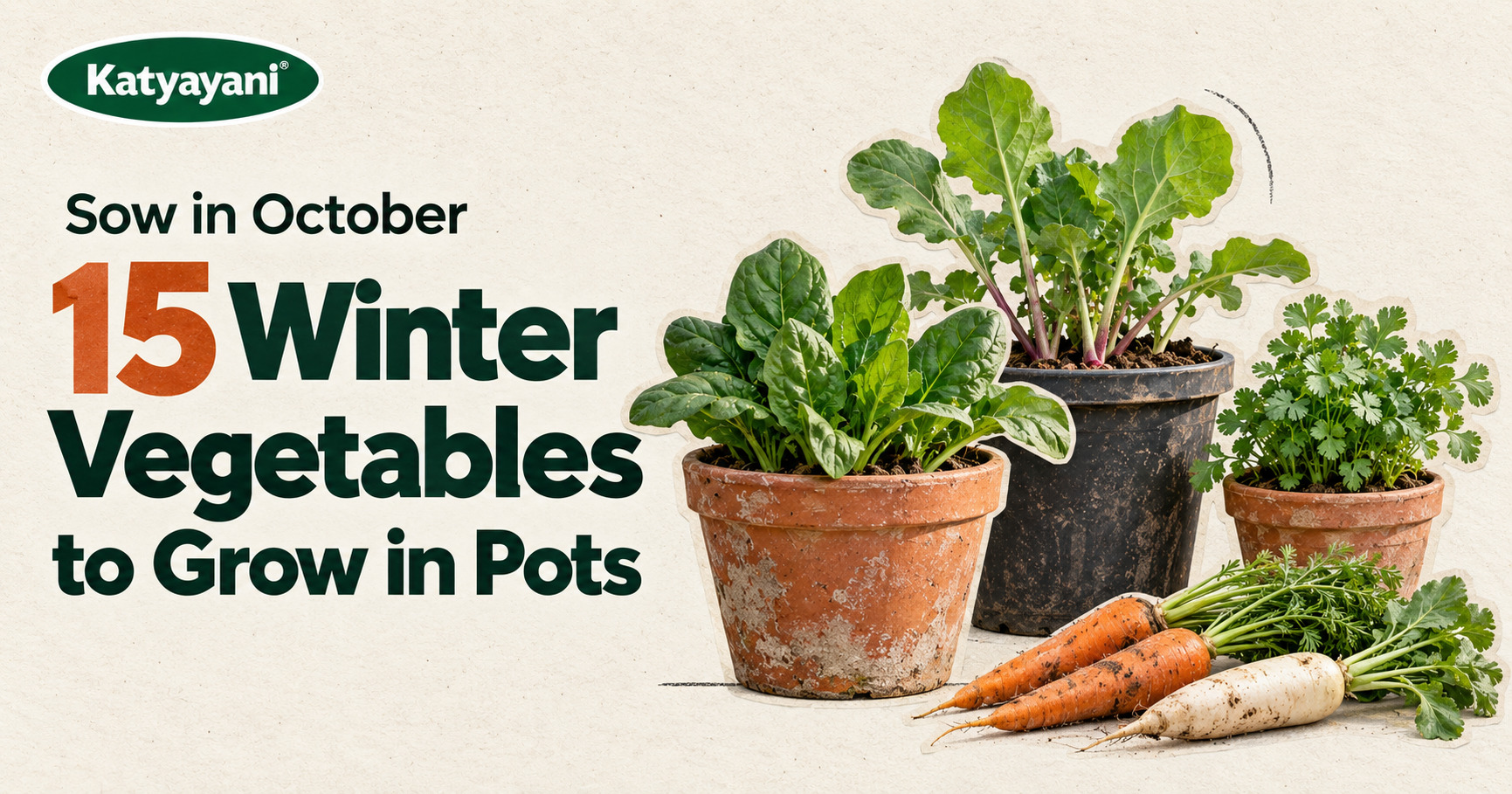
15 Winter Vegetables to Grow in Pots (Sow in October)
In the Indian plains, October is the month to sow spinach, methi, coriander, radish, carrot, beetroot, turnip, mustard greens, lettuce, peas and spring onion directly in pots, and to raise cauliflower, cabbage, broccoli and knol-khol seedlings. Use 6 to 8 inch pots for greens, 12 inch pots for roots, and 12 to 14 inch pots for cabbage-family crops.
 9 min
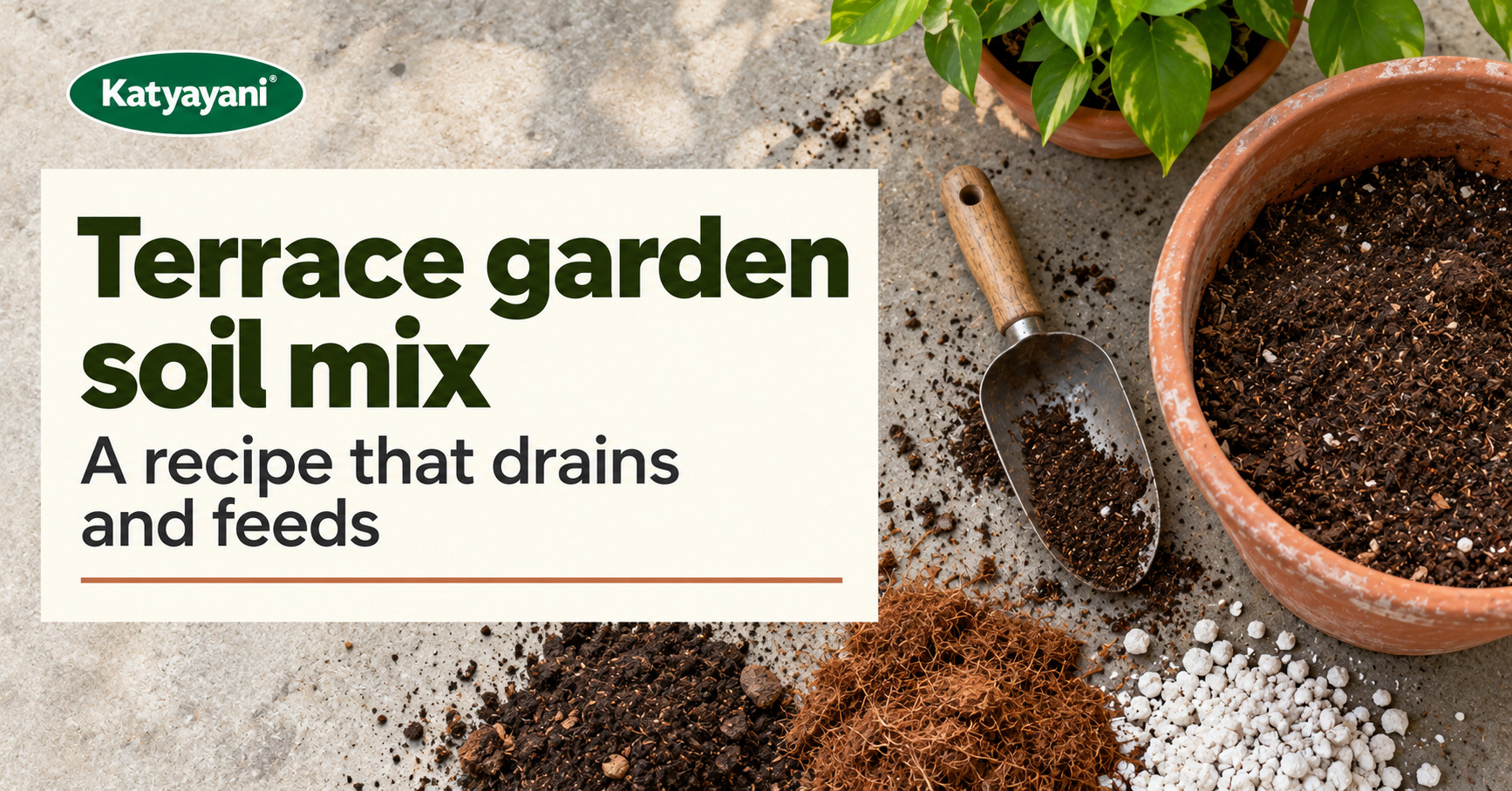
Terrace garden soil mix: a recipe that drains and feeds
A working terrace mix is roughly 40 percent coco peat for water holding, 30 percent compost for nutrition and biology, and 30 percent perlite or coarse sand for drainage and air. Garden soil should be no more than a quarter of the total, and can be left out completely. The mix must drain within a mi
